Classic Creamy Mashed Potatoes Recipe
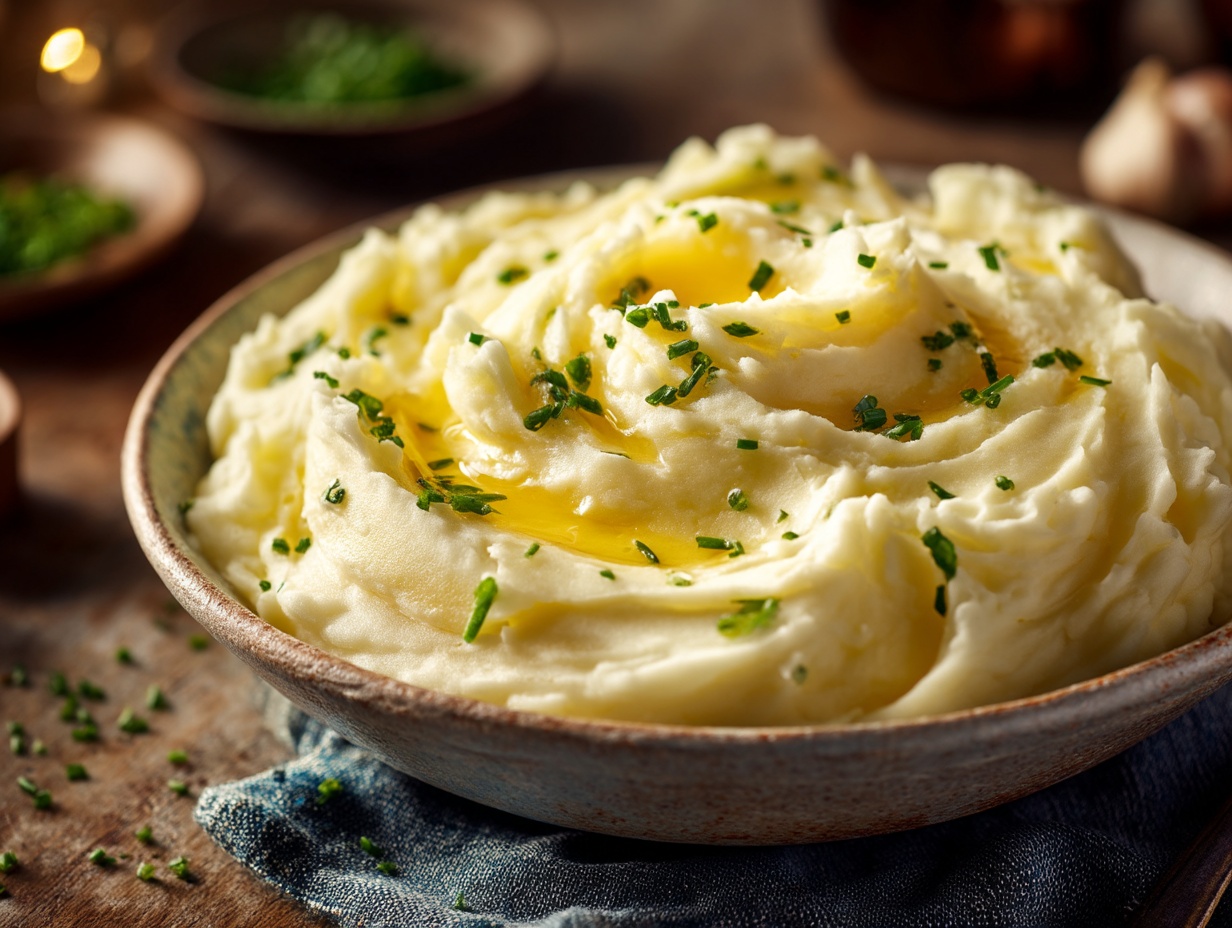
Mashed potatoes are the ultimate comfort food-creamy, buttery, and absolutely irresistible. This timeless side dish deserves a place at every dinner table, from casual weeknight meals to holiday feasts. The beauty of mashed potatoes lies in their simplicity: just a few quality ingredients transform humble potatoes into something genuinely luxurious.
Once you master this classic recipe, you’ll find yourself making it again and again. Your family will love the velvety texture and rich flavor, and you’ll love how easy it is to prepare. Ready to create mashed potato magic in your kitchen?
Nutrition Facts
Per 100g serving:
- Calories: 115 kcal
- Protein: 2.2g
- Carbohydrates: 17.8g
- Fat: 4.5g
- Fiber: 1.2g
- Sodium: 85mg
Ingredients
- 2 lbs (900g) russet or Yukon gold potatoes
- 4 tablespoons (60g) unsalted butter
- ½ cup (120ml) heavy cream or whole milk
- ¼ cup (60ml) sour cream (optional, for extra tang)
- Salt and white pepper to taste
- 2 tablespoons fresh chives, chopped (optional garnish)
Step-by-Step Instructions
1. Select and prepare your potatoes
Start by choosing the right potatoes. Russet potatoes are starchy and create fluffy mashed potatoes, while Yukon gold potatoes offer a naturally buttery flavor and creamier texture. Peel your potatoes and cut them into uniform chunks about 2 inches in size. Uniform pieces ensure even cooking so no potato is overdone while another remains hard. Rinse the cut potatoes under cold water to remove excess starch-this helps create a lighter, fluffier result.
2. Boil the potatoes
Place your prepared potatoes in a large pot and cover them completely with cold water. Add a pinch of salt to the water. Bring the water to a rolling boil over high heat, then reduce to a medium boil. Cook the potatoes for 12-15 minutes until they’re completely tender and easily pierced with a fork. You want them soft enough to break apart with minimal pressure. Start checking at the 12-minute mark to avoid overcooking, which can make them watery and gluey.
3. Drain and dry the potatoes
Once the potatoes are cooked, pour them into a colander and let them drain thoroughly. Return the drained potatoes to the same pot. Leave them on the stove over low heat for 1-2 minutes to allow any remaining moisture to evaporate. This crucial step prevents watery mashed potatoes. You’ll notice some steam rising from the pot-this is exactly what you want to see.
4. Warm your dairy ingredients
While the potatoes are draining, warm your butter and cream together in a small saucepan or microwave. Warm dairy blends more smoothly into hot potatoes and creates a more cohesive, creamy texture. Cold milk or cream would cool down your hot potatoes and create lumps. This simple step makes a noticeable difference in your final result.
5. Mash the potatoes
Add the warm butter and cream to the hot potatoes. Using a potato masher, gently mash the potatoes with firm, circular motions. Don’t overmix or use an electric mixer, as this can break down the starch and make the potatoes gluey. Continue mashing until you reach your desired consistency-some prefer chunky texture, while others like them smooth and creamy. Add the sour cream if using, and fold it in gently.
6. Season to perfection
Taste your mashed potatoes and season with salt and white pepper. White pepper is preferred because black pepper specks are visible in the white potatoes. Start with ½ teaspoon of salt and add more gradually, tasting as you go. Remember that salt brings out the potato flavor and rounds out all the other ingredients beautifully.
7. Transfer and garnish
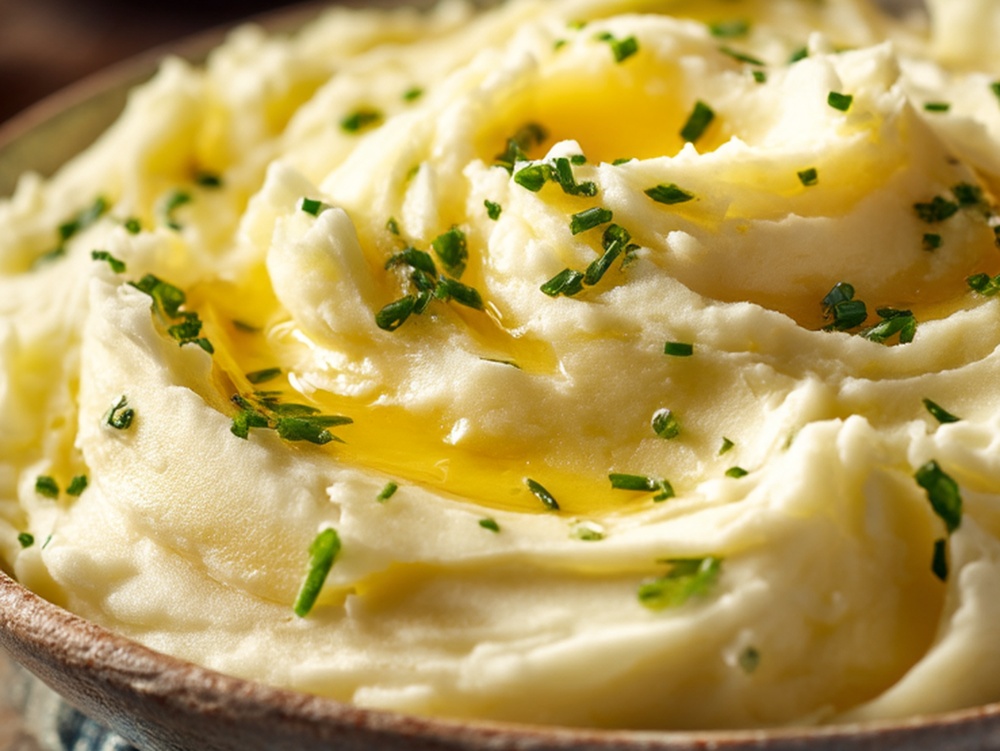
Spoon your mashed potatoes into a serving bowl and create a small well on top with the back of a spoon. Place an extra pat of butter in the well-it will melt into the potatoes and look absolutely appetizing. Garnish with fresh chives if desired.
Tips for Variations or Side Dishes
Garlic lovers: Roast 4-5 garlic cloves and mash them into the potatoes for a subtle, sweet garlic flavor.
Cheese variation: Stir in ½ cup grated cheddar, parmesan, or gruyere cheese for an upgraded version.
Herb blend: Add fresh rosemary, thyme, or parsley to complement your main dish.
Cauliflower mix: Replace half the potatoes with cooked cauliflower for a lighter, lower-carb option.
Serving partners: Mashed potatoes pair beautifully with roasted chicken, grilled steak, braised beef, glazed ham, or roasted vegetables.
Serving Suggestions
Serve your mashed potatoes immediately while they’re still hot and creamy. Transfer them to a warmed serving dish to maintain their temperature throughout the meal. For buffet-style dining, you can keep them warm in a slow cooker on the low setting for up to 2 hours. Create an attractive presentation by dolloping the potatoes in the center of the bowl and making decorative swirls with the back of a spoon. Add a knob of butter and fresh herb garnish right before serving for visual appeal and a professional finish.
FAQ
1. Can I make mashed potatoes ahead of time?
Yes, you can prepare them several hours in advance. Keep them warm in a slow cooker on low heat, or refrigerate them and reheat gently before serving. Add an extra splash of warm milk when reheating to restore the creamy texture, as mashed potatoes tend to thicken as they cool.
2. Why are my mashed potatoes gluey?
Gluey potatoes usually result from overmixing, using a food processor, or using waxy potatoes instead of starchy ones. Stick with russet potatoes and mash gently by hand. Additionally, make sure you’ve drained all excess moisture from the potatoes before mashing.
3. Can I use red potatoes instead of russet?
Red potatoes have a waxy texture and lower starch content, making them less ideal for traditional fluffy mashed potatoes. However, you can use them if you prefer a chunkier, more textured result. Yukon gold potatoes are the best alternative to russet potatoes.
4. How should I store leftovers?
Store leftover mashed potatoes in an airtight container in the refrigerator for up to 3 days. You can also freeze them for up to 3 months. Reheat gently on the stovetop with additional warm milk, stirring frequently to ensure even heating.
5. How much butter and cream is too much?
The recipe provided offers a good balance of richness and comfort. For lighter mashed potatoes, use 3 tablespoons butter and ⅓ cup milk. For extra-indulgent mashed potatoes, increase butter to 5 tablespoons and cream to ¾ cup. Adjust based on your personal preference and dietary needs.