Perfect Juicy Pork Roast with Garlic and Herbs

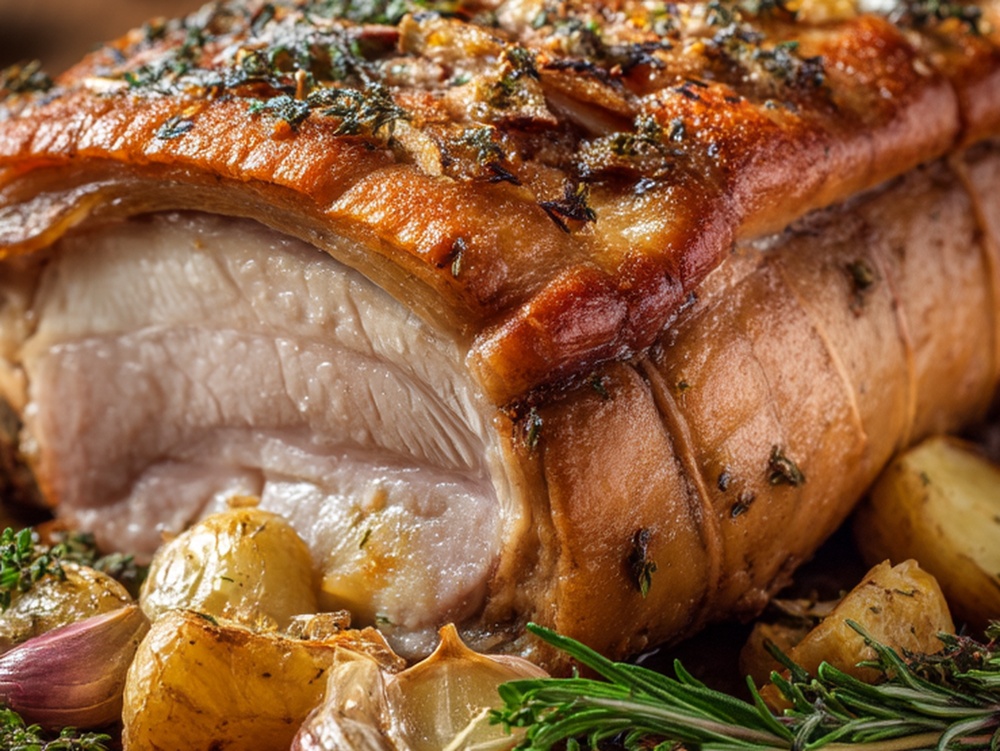
There’s something incredibly satisfying about pulling a golden, crackling pork roast out of the oven. The aroma fills your entire kitchen, and you know you’re about to enjoy something special. This classic pork roast recipe delivers tender, juicy meat with a beautifully crispy exterior every single time.
It requires minimal prep work but produces maximum flavor. With just a handful of simple ingredients and about 20 minutes of hands-on time, you’ll create a centerpiece dish that looks and tastes like it came from a professional kitchen. This is comfort food at its finest.
Nutrition Facts
Per 100g serving:
- Calories: 242 kcal
- Protein: 27g
- Carbohydrates: 1g
- Fat: 14g
*Note: Nutritional values may vary based on the specific cut of pork and serving size.*
Ingredients
- 1.5 kg (3.3 lbs) boneless pork loin roast
- 4 cloves garlic, minced
- 2 tablespoons olive oil
- 1 tablespoon fresh rosemary, finely chopped
- 1 tablespoon fresh thyme leaves
- 1 teaspoon sea salt
- 1 teaspoon black pepper
- 1 teaspoon paprika
- 250 ml (1 cup) chicken broth
Step-by-Step Instructions
1. Take the pork out of the refrigerator
Remove your pork roast from the refrigerator about 30 minutes before cooking. This allows the meat to come to room temperature, which ensures even cooking throughout.
Cold meat placed directly in a hot oven will cook unevenly. The outer layers may overcook before the center reaches the proper temperature.
2. Preheat your oven
Set your oven to 220°C (425°F) and allow it to fully preheat. A hot oven is essential for creating that beautiful golden crust on your pork roast.
While the oven heats up, you’ll have time to prepare your herb rub. This high initial temperature will seal in the juices.
3. Prepare the herb and garlic rub
In a small bowl, combine the minced garlic, olive oil, rosemary, thyme, salt, pepper, and paprika. Mix everything together until you have a fragrant paste.
The olive oil helps the herbs and spices adhere to the meat. It also promotes browning during roasting.
4. Score and season the pork
Using a sharp knife, make shallow cuts across the top of the pork roast in a crosshatch pattern. These cuts allow the seasoning to penetrate deeper into the meat.
Rub the herb mixture all over the pork, pressing it into the scored areas. Make sure every surface is well coated with the aromatic blend.
5. Place the roast in a roasting pan
Set the seasoned pork roast in a roasting pan with the fat side facing up. Pour the chicken broth into the bottom of the pan.
The broth will create steam during cooking, keeping the meat moist. It also forms the base for a delicious pan sauce later.
6. Roast at high heat
Place the pan in your preheated oven and roast for 20 minutes at 220°C (425°F). This initial blast of high heat creates a flavorful crust.
Don’t open the oven door during this time. You want to maintain that high temperature for optimal browning.
7. Reduce temperature and continue roasting
After 20 minutes, lower the oven temperature to 180°C (350°F). Continue roasting for approximately 45-60 minutes, depending on the size of your roast.
The pork is done when an instant-read thermometer inserted into the thickest part reads 63°C (145°F). This temperature ensures safe, juicy meat.
8. Rest the roast before carving
Transfer the cooked pork to a cutting board and tent it loosely with aluminum foil. Let it rest for 10-15 minutes before slicing.
Resting allows the juices to redistribute throughout the meat. If you cut too soon, those precious juices will run out onto the cutting board instead of staying in the meat.
9. Make a simple pan sauce (optional)
While the meat rests, place your roasting pan on the stovetop over medium heat. Scrape up any browned bits and let the liquid reduce slightly.
This quick sauce captures all those delicious caramelized flavors. Drizzle it over your sliced pork for extra moisture and taste.
10. Slice and serve
Using a sharp carving knife, cut the pork into slices about 1 cm (½ inch) thick. Arrange the slices on a warm serving platter.
Spoon the pan sauce over the top and serve immediately. Your guests won’t be able to resist diving in.
Tips for Variations or Side Dishes
Flavor Variations:
Try swapping rosemary and thyme for a Mediterranean twist using oregano and lemon zest. For a sweeter profile, add a tablespoon of honey to your rub along with a touch of Dijon mustard.
A spice-crusted version works wonderfully too. Replace the herbs with cumin, coriander, and a pinch of cinnamon for an aromatic Middle Eastern flair.
Perfect Side Dishes:
Roasted vegetables are a natural companion to pork roast. Carrots, parsnips, and potatoes can roast alongside the meat during the last 45 minutes of cooking.
Creamy mashed potatoes soak up the pan juices beautifully. A crisp green salad with apple slices provides a refreshing contrast to the rich meat.
Sautéed green beans with garlic or honey-glazed carrots add color and nutrition to your plate. For something heartier, consider serving with buttery egg noodles or crusty bread.
Serving Suggestions
Present your pork roast on a large wooden cutting board or a warm ceramic platter for visual impact. Surround the sliced meat with fresh herb sprigs for an elegant touch.
Serve the pan sauce in a small gravy boat so guests can help themselves. This keeps the meat from becoming soggy if there are any leftovers.
For a family-style dinner, arrange all the side dishes in separate serving bowls around the main platter. Let everyone build their own perfect plate.
This roast pairs wonderfully with a glass of light red wine like Pinot Noir or a crisp white wine such as Chardonnay. For non-alcoholic options, sparkling apple cider complements the pork beautifully.
FAQ
1. How do I know when the pork roast is done cooking?
The most reliable method is using an instant-read meat thermometer. Insert it into the thickest part of the roast, avoiding any fat pockets, and look for an internal temperature of 63°C (145°F).
The meat will continue cooking slightly during the resting period.
2. Can I use a bone-in pork roast instead?
Absolutely! Bone-in roasts often have more flavor and stay juicier during cooking. Just add about 10-15 minutes to your total cooking time, as bone-in cuts take slightly longer to cook through.
3. How should I store leftovers?
Store leftover pork roast in an airtight container in the refrigerator for up to 4 days. Slice only what you need and store the rest as a whole piece to retain moisture.
Leftovers are perfect for sandwiches, salads, or quick stir-fries.
4. Why is my pork roast dry?
Dry pork usually results from overcooking. Always use a meat thermometer rather than relying on cooking time alone. Skipping the resting period can also cause dryness, as the juices don’t have time to redistribute throughout the meat.
5. Can I prepare the herb rub in advance?
Yes, you can make the herb and garlic rub up to 24 hours ahead and store it in the refrigerator. You can even rub the pork the night before and let it marinate overnight for even more flavor.
Just bring the meat to room temperature before roasting.