
Classic Swiss Cheese Fondue
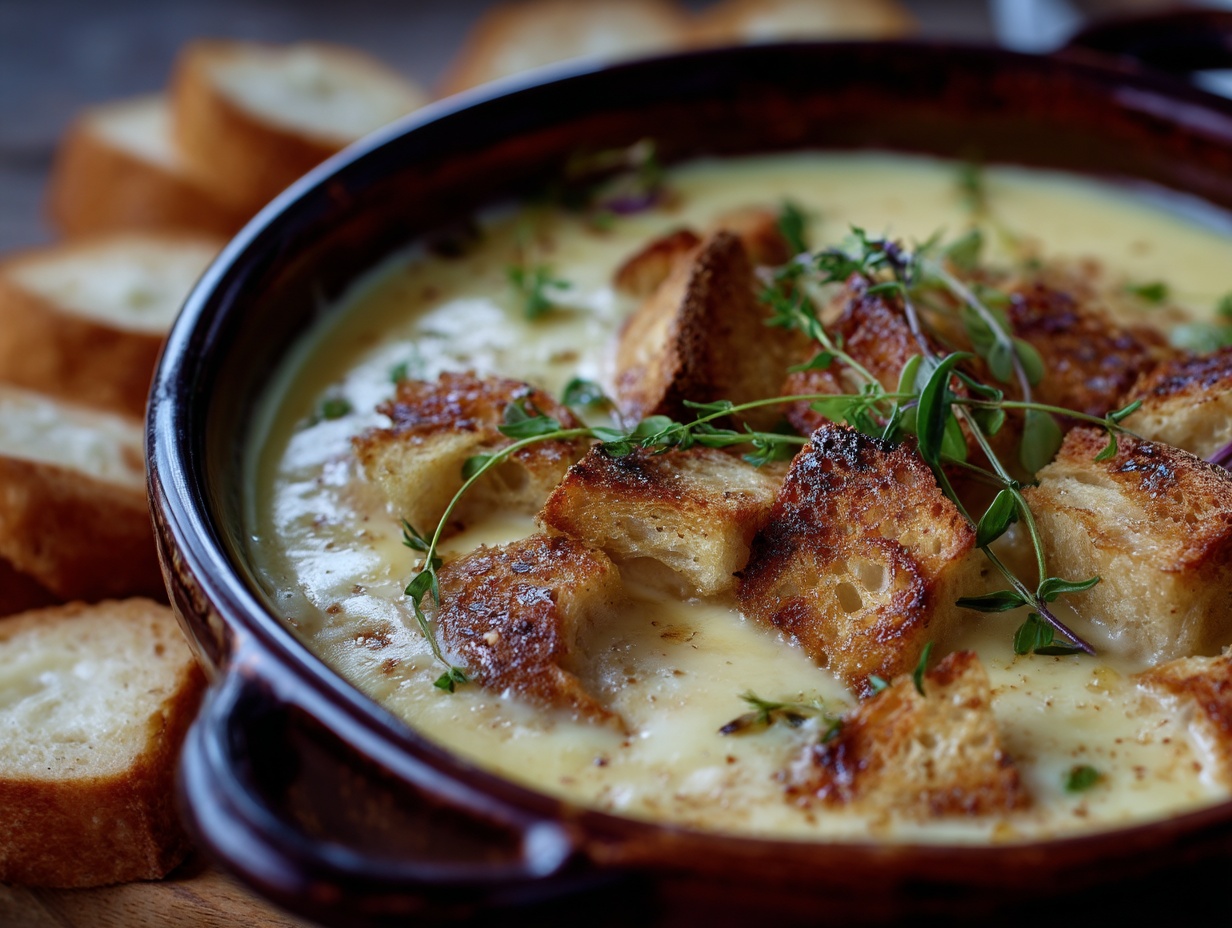
There’s something magical about gathering around a bubbling pot of melted cheese with friends and family. Cheese fondue transforms a simple meal into an interactive dining experience that encourages conversation, laughter, and the pure joy of dipping. This classic Swiss recipe delivers rich, creamy, and utterly satisfying flavors in under 30 minutes.
With just a handful of quality ingredients, you’ll create a dish that feels indulgent yet surprisingly simple. Fondue has been a beloved tradition in Switzerland for centuries, and once you taste its velvety goodness, you’ll understand why. Get ready to impress your guests with this timeless comfort food that never goes out of style.
Nutrition Facts
*Per 100 g of cheese fondue:*
- Calories: 295 kcal
- Protein: 18 g
- Carbohydrates: 4 g
- Fat: 23 g
*Note: Nutritional values may vary based on cheese selection and serving accompaniments.*
Ingredients
- 200 g Gruyère cheese, shredded
- 200 g Emmental cheese, shredded
- 1 clove garlic, halved
- 240 ml dry white wine
- 1 tablespoon lemon juice
- 1 tablespoon cornstarch
- 1 pinch ground nutmeg
- 1 pinch white pepper
- 1 crusty baguette, cubed (for dipping)
Step-by-Step Instructions
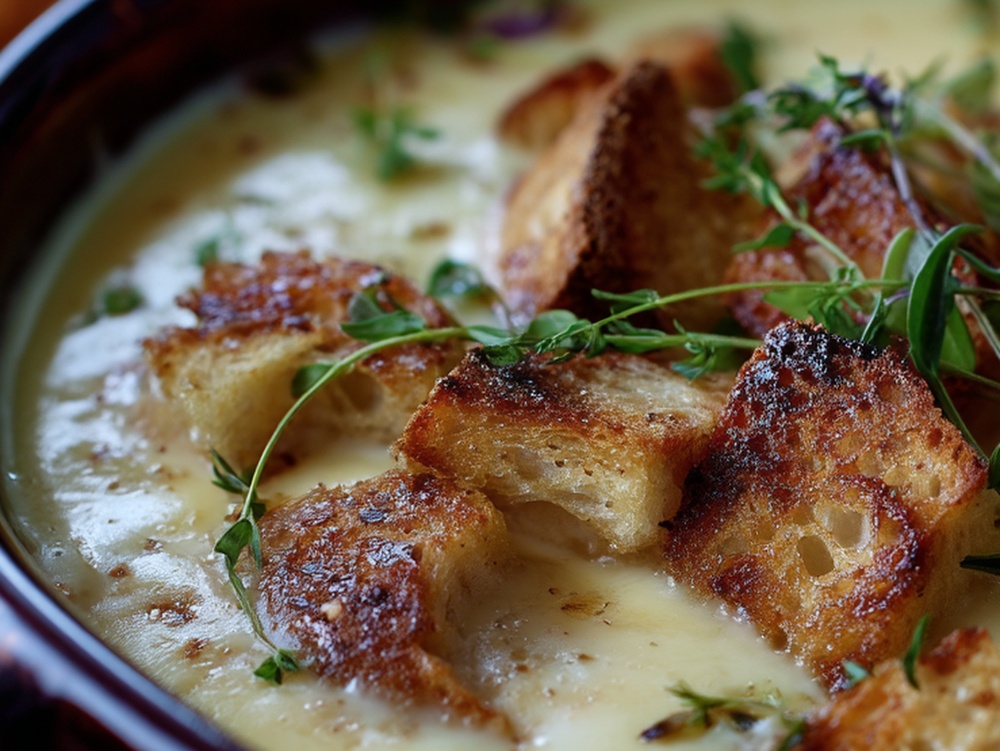
1. Prepare the Cheeses
Start by shredding both the Gruyère and Emmental cheeses using the large holes of a box grater. Freshly shredded cheese melts much more smoothly than pre-packaged varieties.
Toss the shredded cheeses together in a large bowl with the cornstarch until evenly coated. The cornstarch acts as a stabilizer and prevents the cheese from clumping or separating during melting.
2. Prepare the Fondue Pot
Take the halved garlic clove and rub it vigorously all over the inside of your fondue pot or heavy-bottomed saucepan. This infuses the pot with subtle garlic flavor without overwhelming the cheese.
You can discard the garlic clove afterward, or leave it in the pot for a stronger garlic taste. The choice depends on your personal preference.
3. Heat the Wine
Pour the dry white wine and lemon juice into the prepared fondue pot. Place it over medium-low heat and warm the mixture until it just begins to simmer.
Don’t let the wine boil rapidly, as this can affect the final texture. The lemon juice adds brightness and helps the cheese melt smoothly due to its acidity.
4. Add the Cheese Gradually
Begin adding the cheese mixture one small handful at a time, stirring constantly in a figure-eight pattern. Wait until each addition has fully melted before adding more.
This gradual approach ensures a silky-smooth consistency without lumps. Patience is key here-rushing this step can result in a grainy texture.
5. Season and Finish
Once all the cheese has melted into a smooth, creamy sauce, add the ground nutmeg and white pepper. Stir gently to incorporate the seasonings throughout.
Taste and adjust the seasoning as needed. The fondue should be thick enough to coat a piece of bread but still flow easily from your fork.
6. Serve Immediately
Transfer the fondue pot to its stand with a lit burner underneath to keep it warm. The gentle heat prevents the cheese from solidifying while you enjoy your meal.
Arrange your cubed bread and other dippers around the pot for easy access. Encourage everyone to swirl their bread in the cheese to help keep it moving and prevent sticking.
Tips for Variations or Side Dishes
Cheese Variations: Try substituting half the Emmental with Appenzeller or Fontina for a different flavor profile. Raclette cheese also makes an excellent addition.
Add-Ins: Stir in a splash of kirsch (cherry brandy) for the traditional Swiss touch. A teaspoon of Dijon mustard adds lovely depth and complexity.
Additional Dippers: Beyond bread, try steamed broccoli florets, roasted potato cubes, apple slices, blanched asparagus, or cured meats like prosciutto and salami.
Vegetable Platter: Serve alongside a colorful array of raw vegetables such as cherry tomatoes, bell pepper strips, and cucumber slices for a lighter contrast.
Serving Suggestions
Present your fondue in the center of the table where everyone can reach it comfortably. Provide each guest with a fondue fork or long wooden skewer for dipping.
Create an abundant platter of dippers arranged by category-breads on one side, vegetables on another, and meats or fruits in their own sections. This makes it easy for guests to navigate their options.
Keep extra cubed bread warm in a basket covered with a cloth napkin. Cold bread doesn’t absorb the cheese as well as slightly warm pieces do.
Set out small plates for each guest to catch any drips between the pot and their mouths. This keeps the table tidy and makes eating more comfortable.
Consider pairing your fondue with the same white wine you used in the recipe. A crisp Sauvignon Blanc, Pinot Grigio, or traditional Swiss Chasselas works wonderfully.
FAQ
1. What can I use instead of white wine?
You can substitute the white wine with unsweetened apple cider, chicken broth, or non-alcoholic white wine. Add an extra teaspoon of lemon juice to maintain the acidity that helps the cheese melt smoothly.
The flavor will be slightly different but still delicious.
2. Why did my fondue turn out stringy or clumpy?
This usually happens when the heat is too high or the cheese was added too quickly. Always use low heat and add cheese gradually while stirring constantly. Room-temperature cheese also melts more evenly than cold cheese straight from the refrigerator.
3. Can I make fondue ahead of time?
Fondue is best enjoyed immediately after making it, as it can separate or become too thick when reheated. However, you can shred and toss the cheese with cornstarch several hours in advance and store it covered in the refrigerator until ready to use.
4. What should I do if the fondue becomes too thick?
Simply stir in a splash of warm white wine, one tablespoon at a time, until you reach the desired consistency. Keep the fondue warm over low heat and continue stirring.
Adding cold liquid can cause the cheese to seize up.
5. How do I clean a fondue pot with stuck-on cheese?
Fill the pot with warm water and a drop of dish soap, then let it soak for 30 minutes to soften the residue. The cheese should wipe away easily after soaking.
Alternatively, some fondue enthusiasts enjoy scraping out the crusty bottom layer as a special treat called “la religieuse.”